
|
|
|
What is a monsoon? |
| A monsoon is a seasonal shift in the prevailing wind direction, that usually
brings with it a different kind of weather. It almost always refers to the Asian monsoon, a
large region extending from India to Southeast Asia where monsoon conditions prevail.
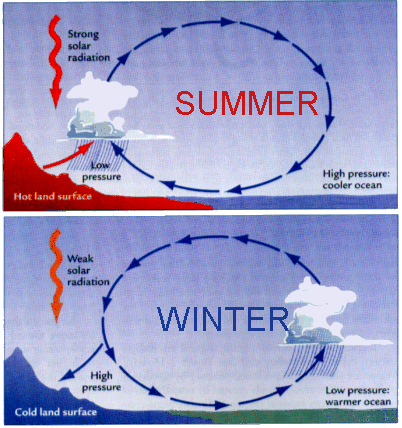
During the winter monsoon, a persistent and large high pressure zone over Asia drives cool, dry air soutward toward the tropics. This provides the monsoon region with its dry season. Then during May and June of each year, the summer monsoon arrives with persistent southerly wind flow driven by a warm air mass with low pressure at the surface that forms over southern Asia as it is warmed by the sun. Air from the relatively higher pressure air mass over the Indian and tropical western Pacific Ocean flows northward toward the low pressure over land, bring with it torrential rains. A late arrival of the monsoon can be bad for agriculture, as the monsoon rains are necessary for summer crops. In India, for example, the dry northerly wind flow over India changes direction, and warm humid air from the Indian Ocean flows from the south, gradually overspreading the Indian subcontinent. Widespread torrential rains, and even severe thunderstorms, large hail and tornadoes can accompany the onset (arrival) of the summer monsoon. The Indian Ocean version of the hurricane, which is traditionally called a "cyclone" in the Indian Ocean, can also form and move ashore in association with the onset of the monsoon. These cyclones have at times killed many thousands of poor people who live in the low-lying areas along the eastern coast of India and Bangladesh. A weaker and much more localized monsoon occurs over the normally dry southwestern United States in the late summer when more humid air, accompanied by thunderstorms, overspreads the region. |
| (page last updated 12/15/2019) |
| SELECT BOX EXAMPLES: | ||
|
||
| Copyright © 2023 WeatherStreet.com |
| Put our free WeatherStreet weather lookup on your web page. |
Terms & Conditions

|
|
|